Journal  /  Roofing

What a living roof changes about the roof beneath it

A planted roof stays on top of the membrane for decades. That decides which membrane goes down first, and it shapes the path water takes to the scuppers.

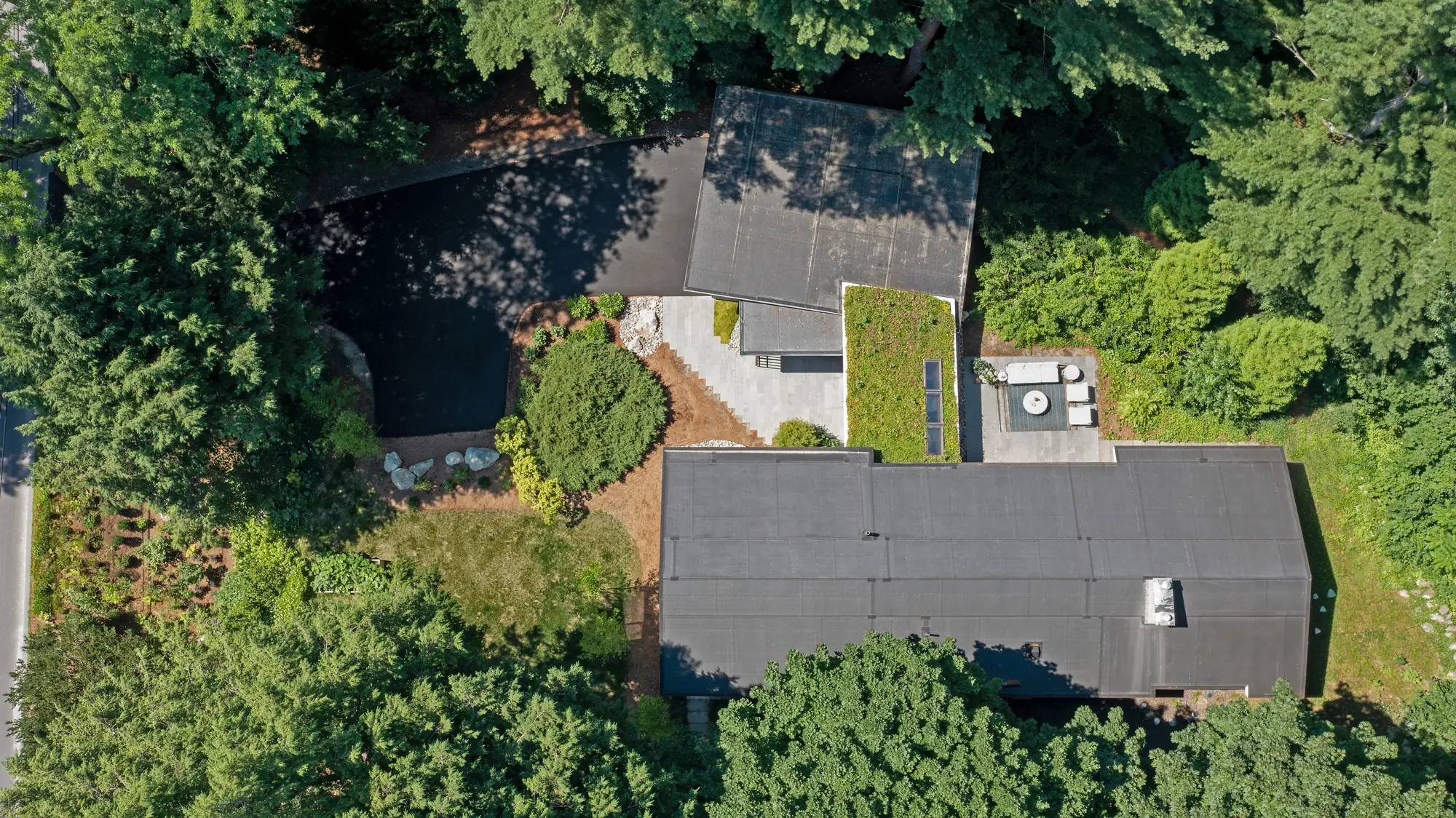
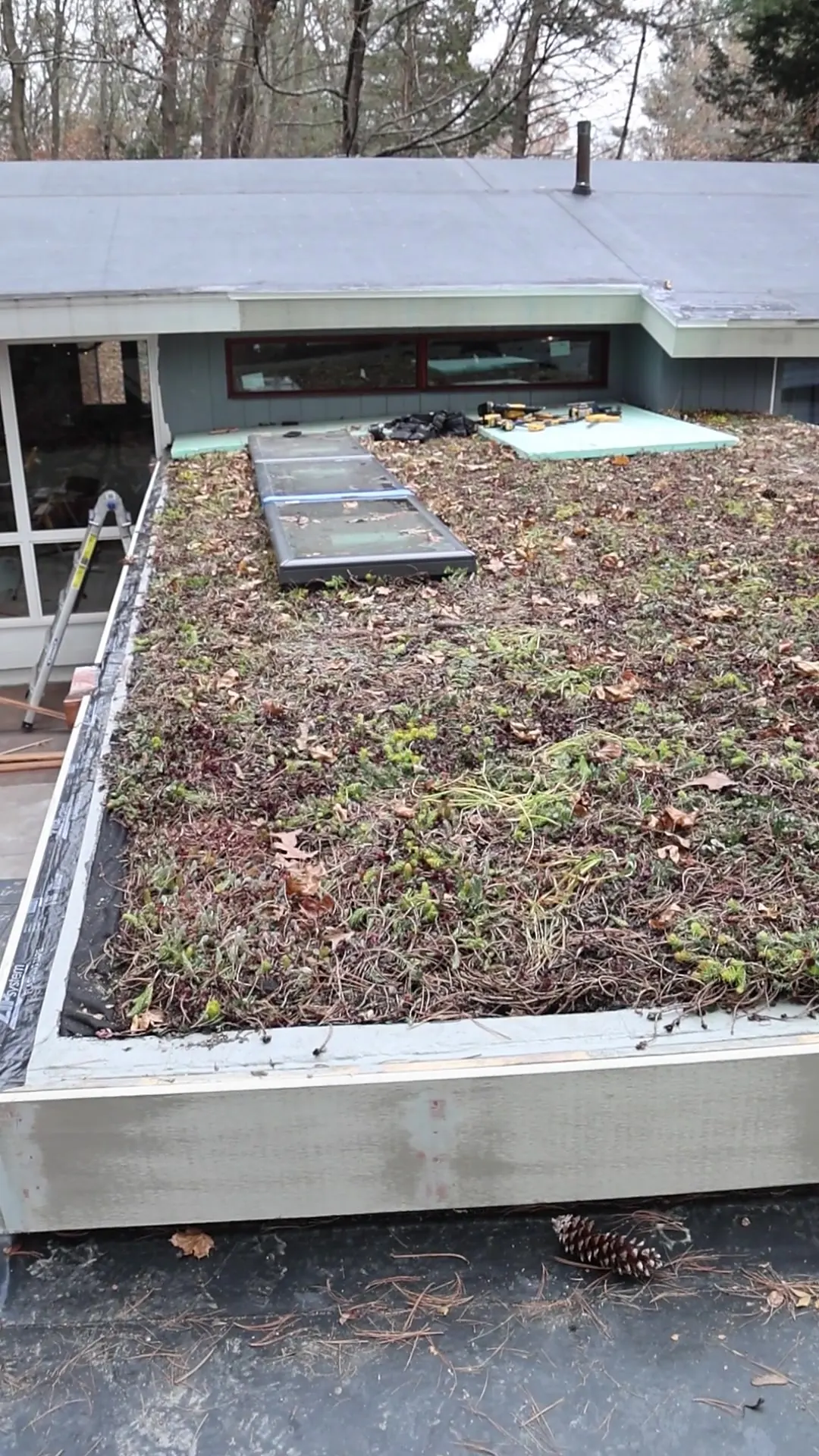
The planted sedum roof of the breezeway at The Space Between, seen from above with its three skylights
The living roof from above
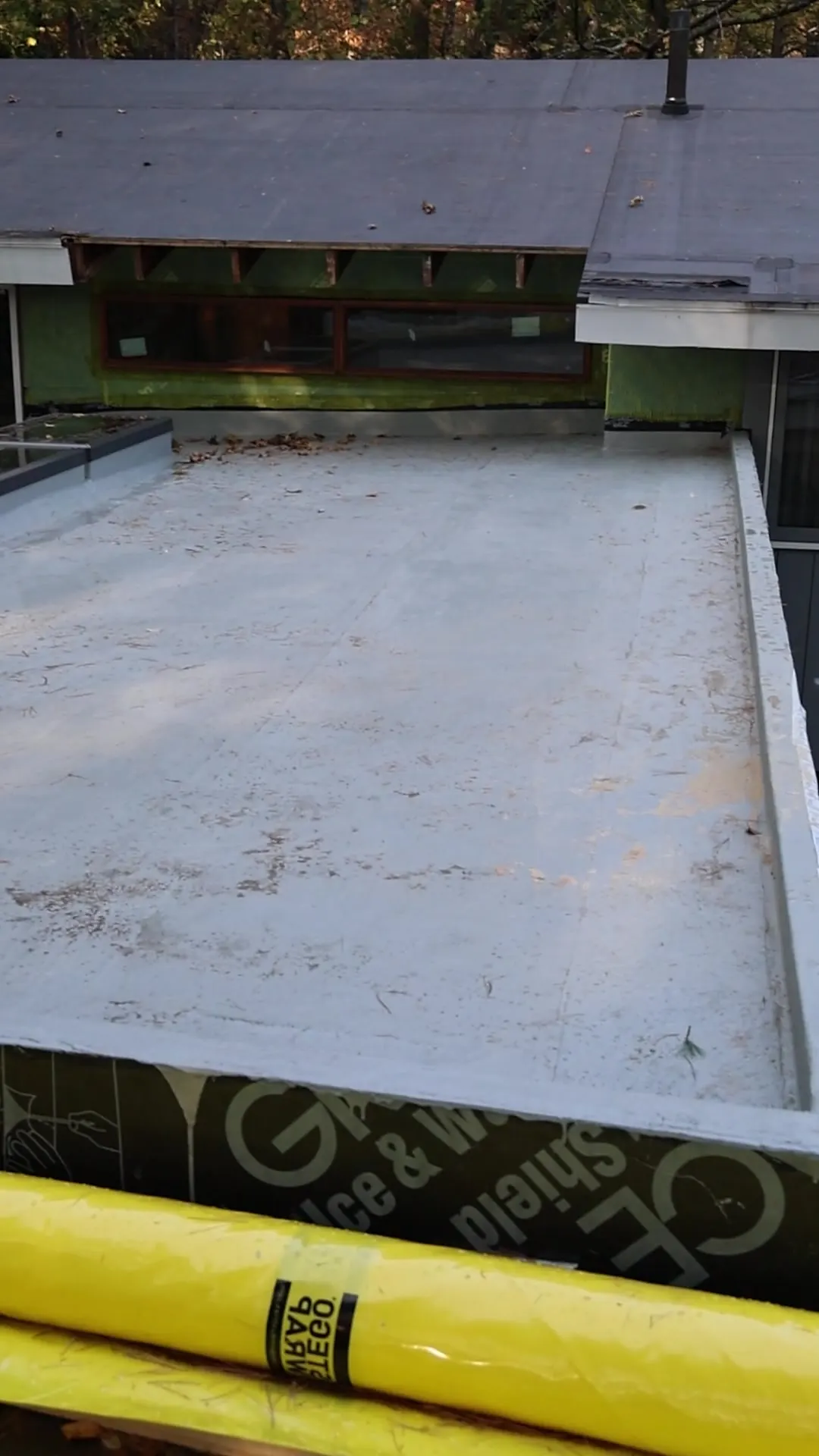
The finished roof membrane on the breezeway before the planted trays were installed
Membrane before the trays
LiveRoof sedum trays installed on the breezeway roof beside the skylights
Sedum trays in place
The condition

Most roof membranes are expected to be replaced.

Asphalt shingles and EPDM have a service life of roughly 20 to 30 years, and on an ordinary roof replacing them is routine.

The breezeway roof at The Space Between carries LiveRoof sedum trays: trays of plants that live and grow on the roof. Replacing a membrane beneath them would mean lifting every tray to reach it.
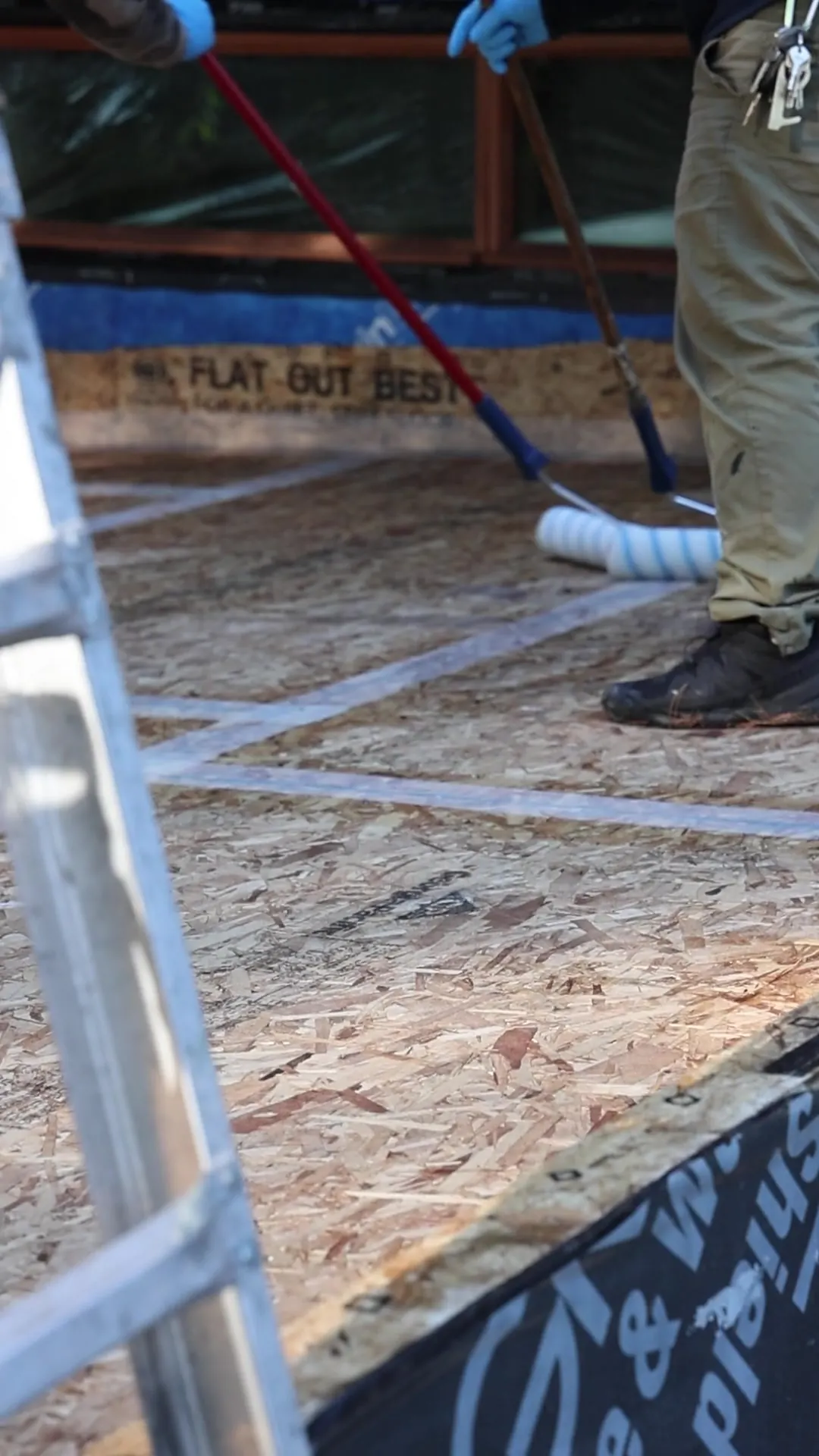
The liquid membrane being rolled onto the breezeway roof deck
Rolled on in place
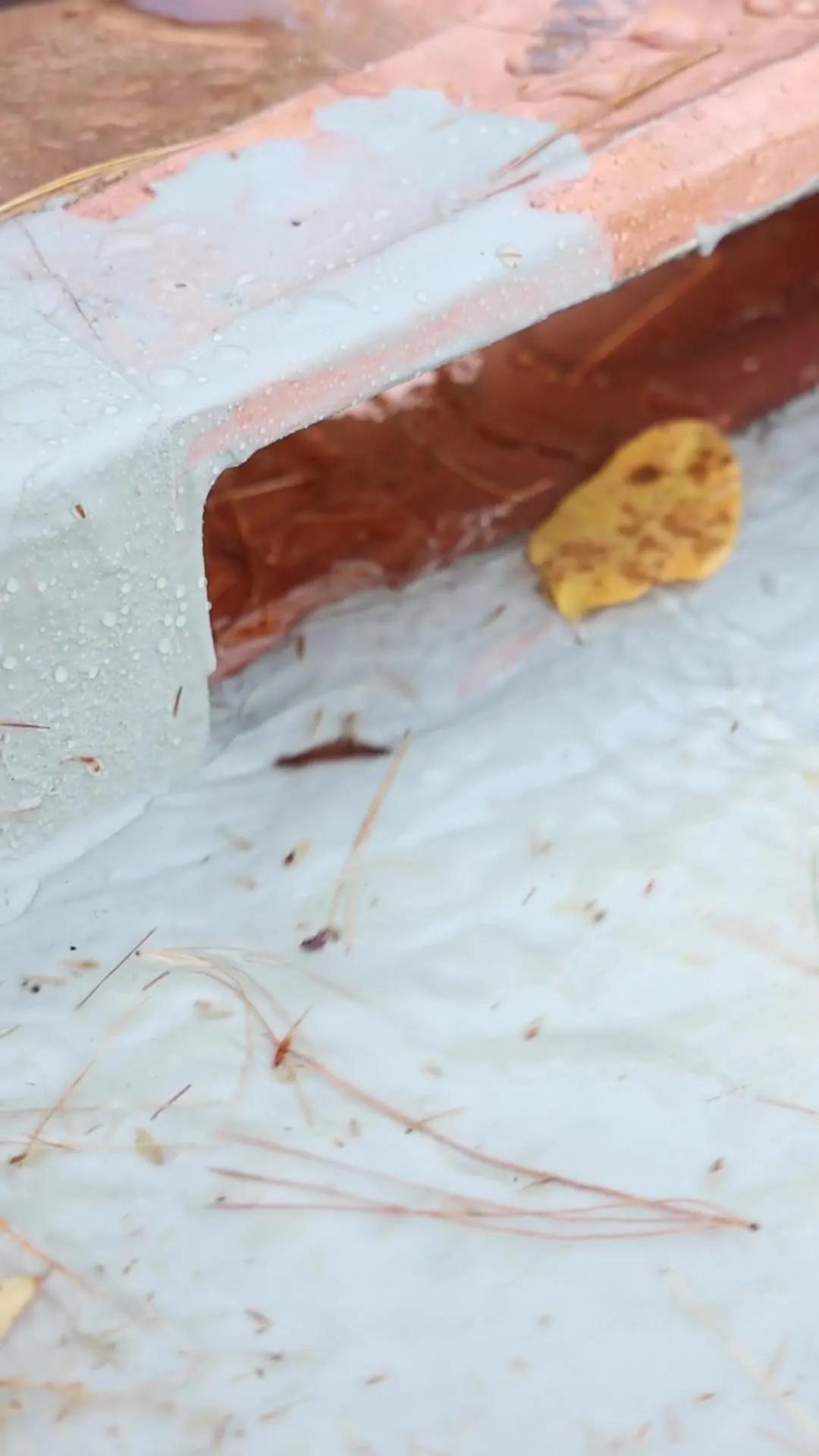
Close view of the cured membrane sealed to the flashing at the roof edge
Sealed at the roof edge
The membrane

Under the trays is Kemper System, not EPDM.

Kemper is a resin-based membrane applied as a liquid. It is rolled on in place and cures into a single, fully sealed, monolithic layer.

Its life expectancy is much longer, and the only reason to return to it is physical damage, which is repaired with a small patch in that area alone. The trays stay where they are.

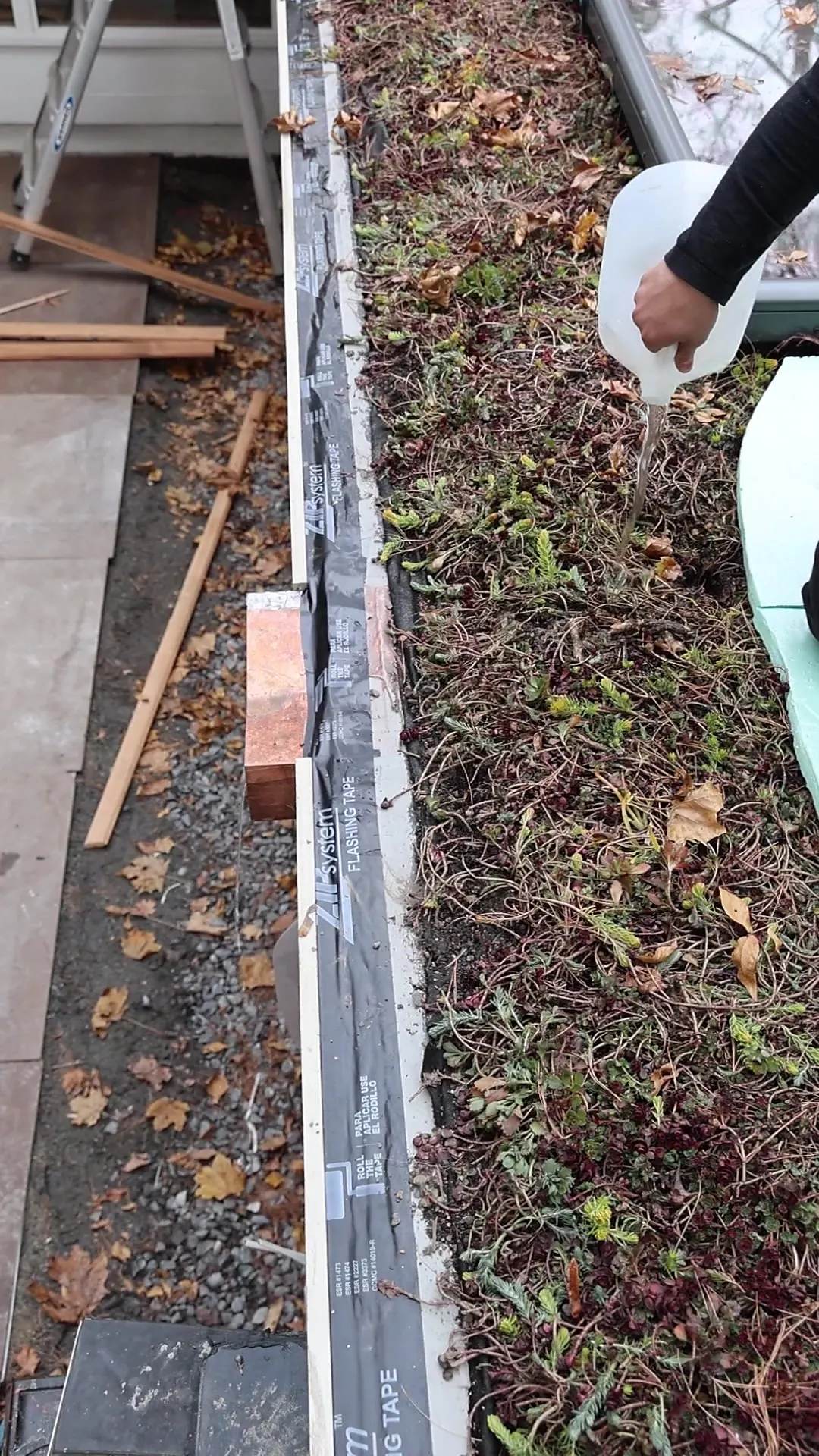
Water poured at the edge of the planted roof to show where it drains
Water poured at the edge
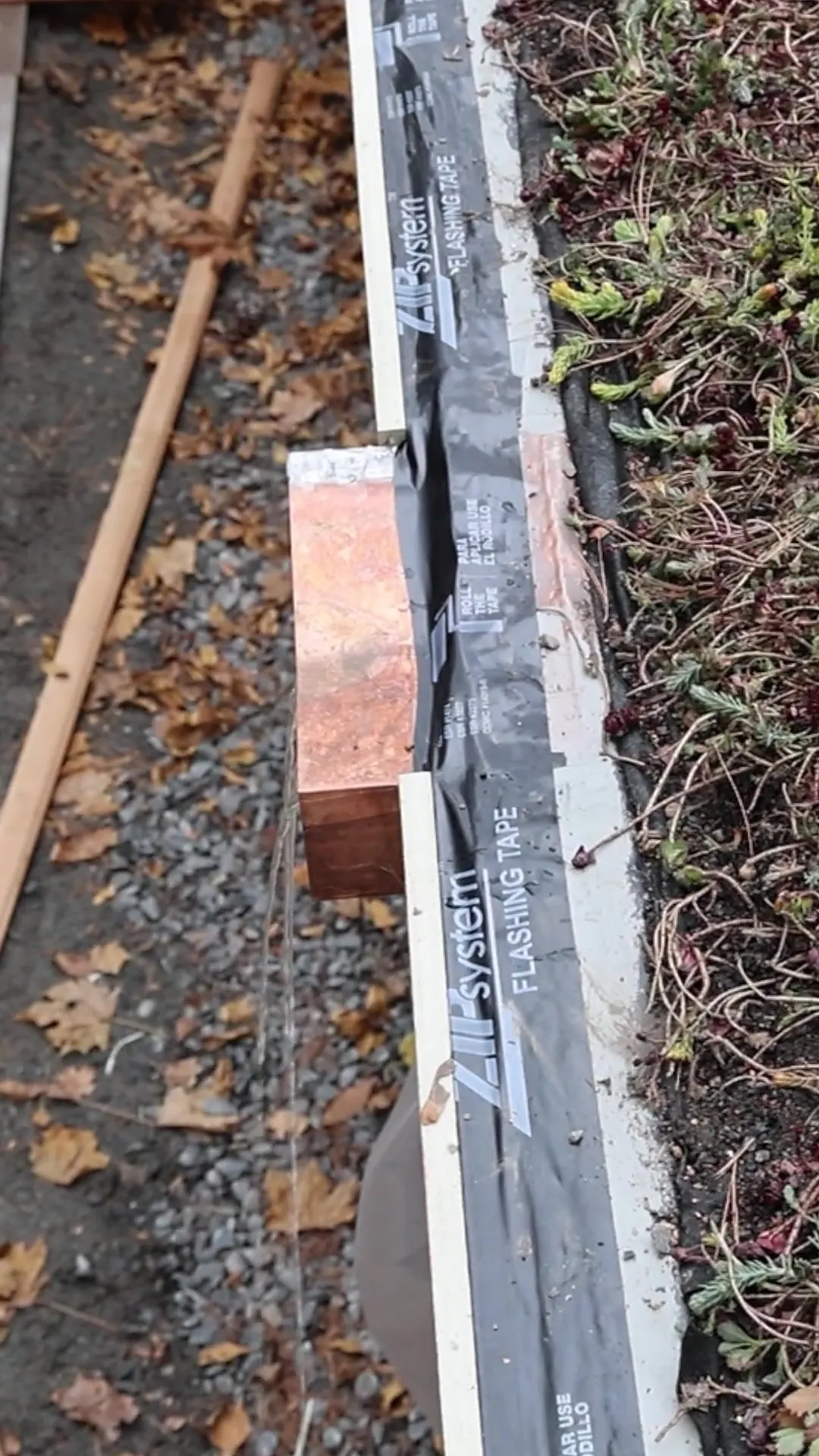
The gravel margin beside the planted trays and a copper scupper at the roof edge
Gravel margin and scupper
The drainage

Water still has a clear way off the roof.

The trays sit beside a gravel margin, and between the gravel and the trays the plants sit in there is open space for water to escape.

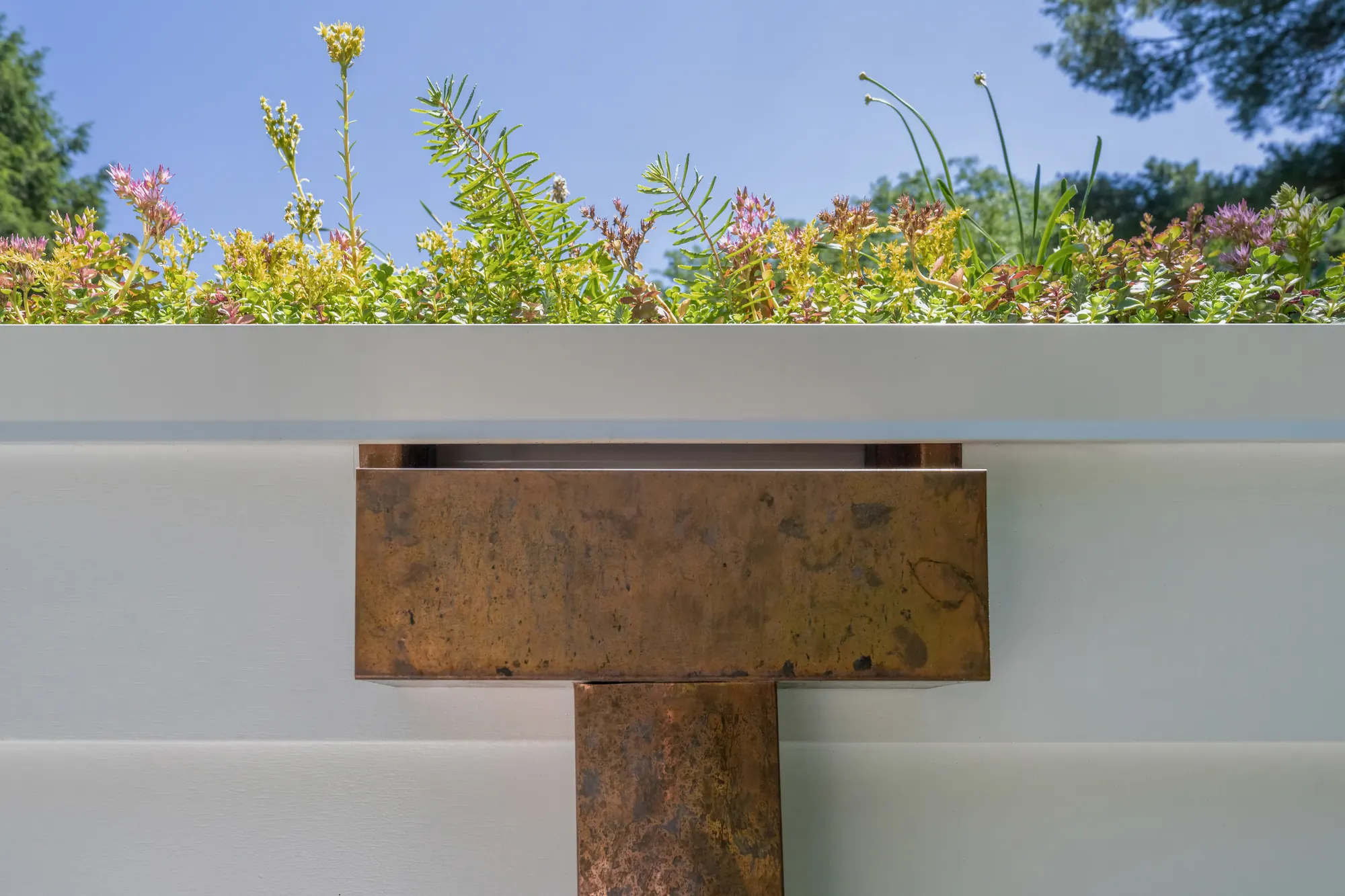
It travels along the roof to the cant strip at the rear edge and exits through the scuppers into the downspouts.

A copper scupper box and leader on the fascia of the breezeway at The Space Between
Copper scupper box and leader
The result

Less to service, and a more robust roof.

The planting is perennial and is seen from the street and from the rear patio. Beneath it is a membrane that does not have to be uncovered and replaced on a 20 to 30 year cycle.

That keeps future service work for the owner to a minimum.

Start a conversation

Working through a detail like this?

Tell us about your project and the drawings you have. We will tell you how we would build it.

Start a conversation